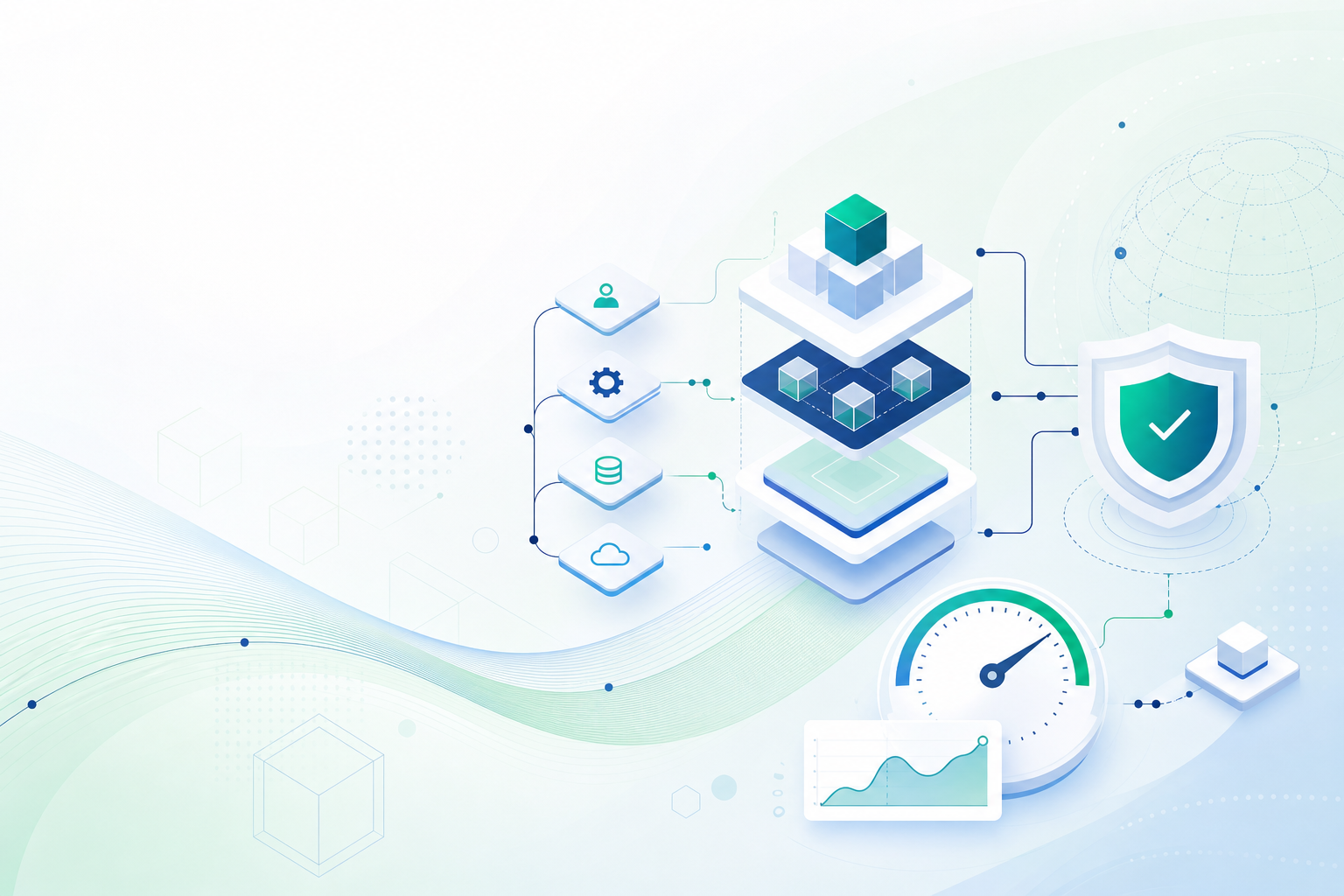
Architecture
Designing modular platform foundations, API boundaries, and decision standards that keep complex systems maintainable under growth.
These capabilities are applied across telecom, banking, healthcare, government, and digital product environments in the US, UK, GCC, and Australia.
Designing modular platform foundations, API boundaries, and decision standards that keep complex systems maintainable under growth.
Planning for usage expansion from day one through tenancy-aware design, clean service decomposition, and scalable data flows.
Embedding security into integration design, infrastructure choices, deployment workflows, and access controls to reduce operational risk.
Engineering for predictable response times and stable user experience under production load through tuning, profiling, and architecture refinement.
Applying AI-assisted workflows and machine learning integration in practical use cases where governance and business value are clearly defined.
Building and modernizing cloud environments on AWS and GCP with deployment consistency, infrastructure clarity, and reliability focus.
Implementing CI/CD, release discipline, and infrastructure automation so engineering teams can move faster without sacrificing stability.
Running delivery programs with stakeholder alignment, milestone clarity, and technical governance across multi-team initiatives.
Capability matters when it is applied under real constraints: deadlines, legacy dependencies, changing business priorities, and evolving compliance expectations. This is where architecture leadership and delivery discipline need to operate together.
Across enterprise engagements, this approach has supported multi-tenant SaaS platforms, enterprise portals, healthcare systems, payment integrations, and intelligent automation programs with long-term maintainability in mind.
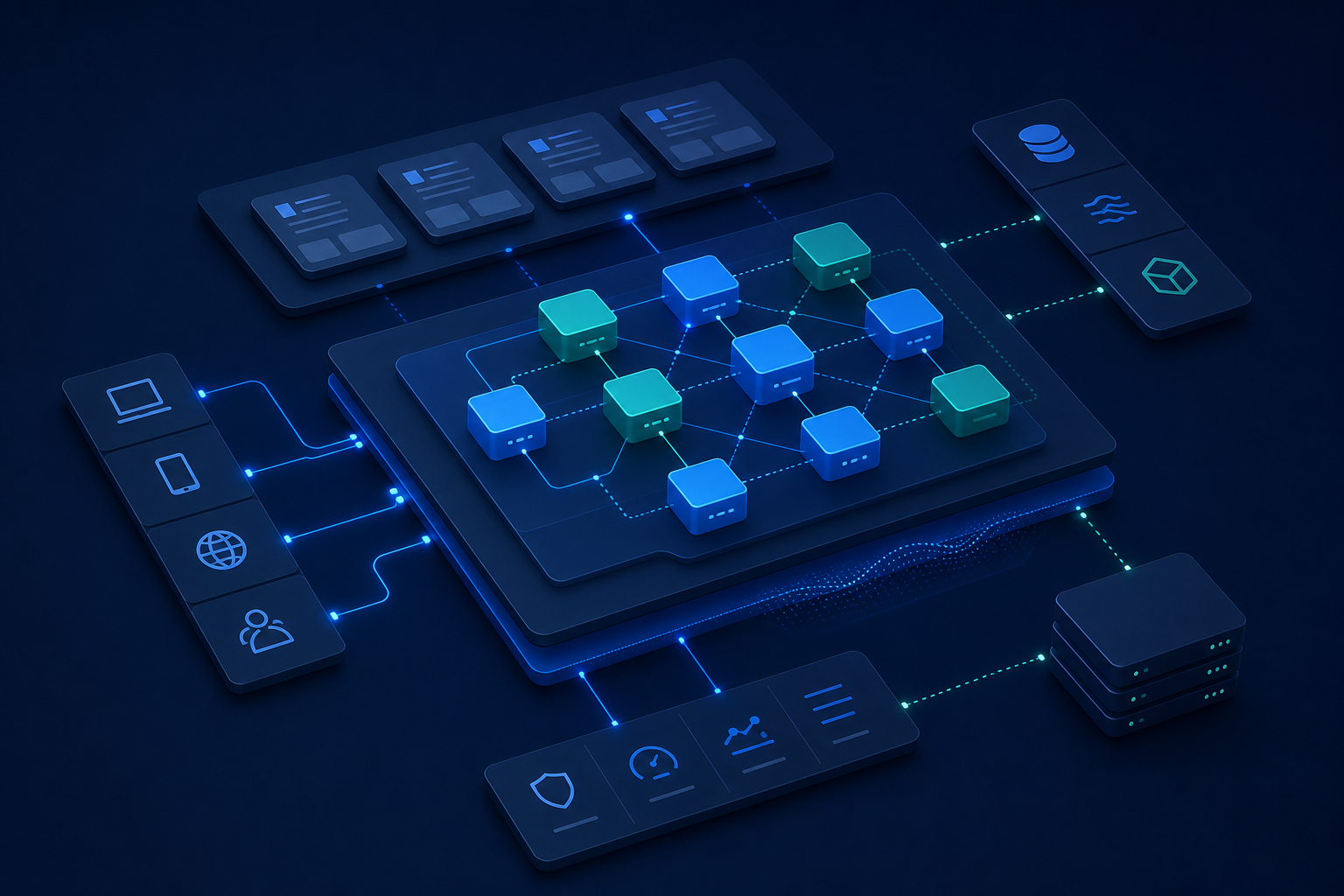
Explore how these capabilities are applied across specialized tracks.
How engineering strategy, mentoring, and stakeholder management shape delivery outcomes.
View leadership page →Cloud infrastructure, CI/CD workflows, and infrastructure automation in enterprise environments.
View cloud and DevOps page →Multi-tenant SaaS, payment systems, and platform design approaches grounded in delivery realities.
View architecture page →Architecture leadership, scalability planning, security-first design, performance engineering, AI and automation integration, cloud infrastructure depth, DevOps maturity, and enterprise delivery governance form the core capability model.
Yes. The work covers strategic decision-making and practical delivery execution so architecture direction and implementation quality stay aligned.
Capability extends to multi-tenant SaaS products, enterprise portals, healthcare systems, payment integrations, cloud infrastructure, and intelligent automation programs.
Reliability is built through architecture guardrails, strong API contracts, deployment automation, and phased rollout practices that match production realities.
Yes. Engagements can start with architecture and capability assessment, then progress into roadmap planning and implementation support.
Discuss your architecture, cloud, AI, or delivery initiative with Muhammad Adnan Tahir and define a practical execution path.