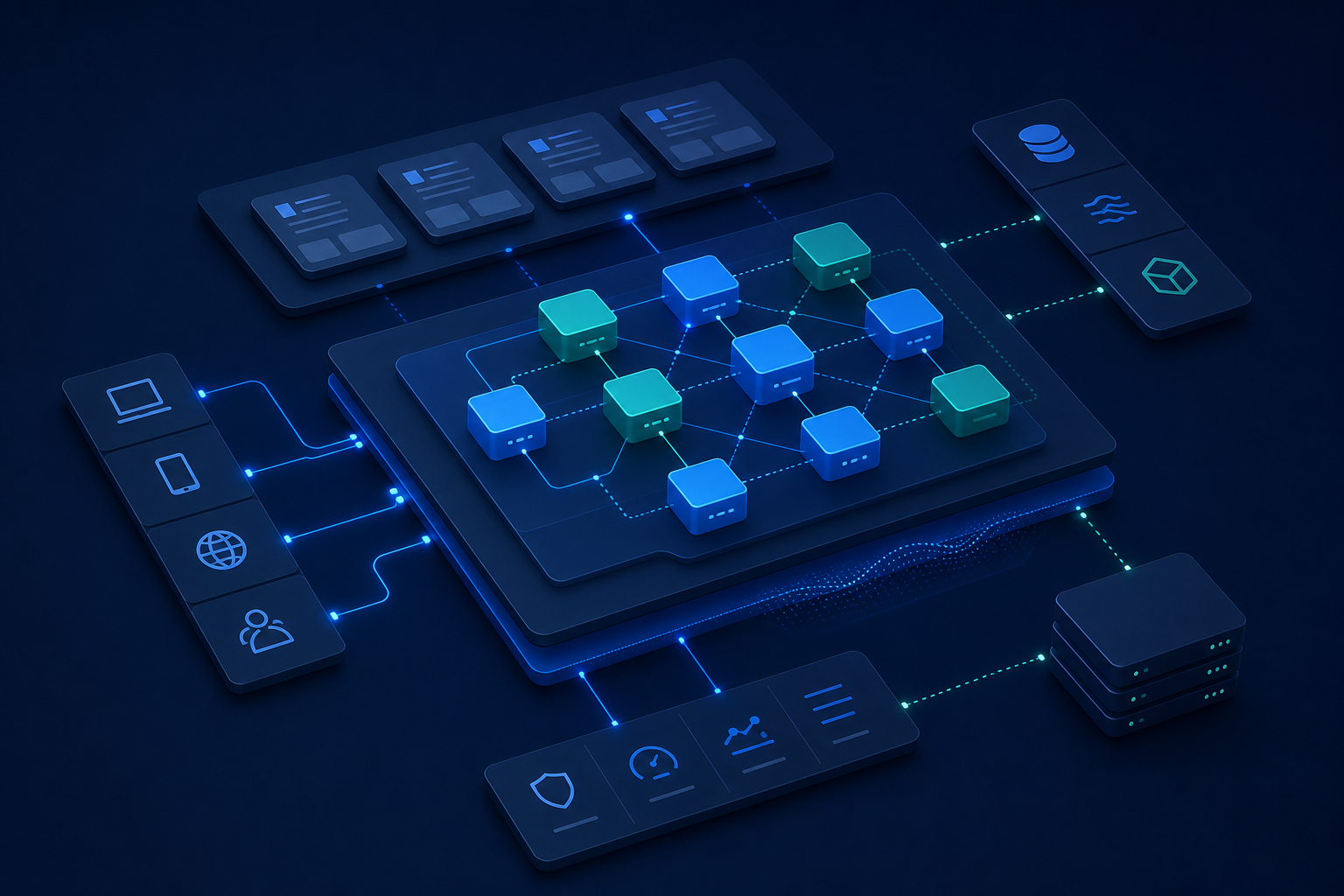
Multi-tenant SaaS Platforms
Designing tenancy-aware architectures with scalable service layers, isolation-aware patterns, and product extensibility to support growth without structural instability.
Designing tenancy-aware architectures with scalable service layers, isolation-aware patterns, and product extensibility to support growth without structural instability.
Architecting healthcare-oriented systems where reliability, secure process handling, and workflow continuity are non-negotiable requirements.
Building dependable payment integration patterns through clear transaction flow modeling, API robustness, and operational control points.
Creating enterprise portal architectures that support diverse stakeholder workflows, maintainability, and long-term operational evolution.
Architecture only creates value when teams can execute against it. For this reason, architecture work is tied to engineering standards, release checkpoints, and delivery milestones that keep implementation predictable.
Explore related tracks to see how architecture is reinforced through cloud operations and technology leadership.
Operational foundations that support architecture intent in production environments.
View cloud and DevOps →Leadership systems that keep architecture and delivery teams aligned.
View technology leadership →Transformation frameworks that connect architectural change to business strategy.
View digital transformation →Multi-tenant SaaS design, healthcare systems, payment integrations, and enterprise portals are key architecture focus areas in the profile.
By defining boundaries, integration contracts, and scaling assumptions early, architecture reduces uncertainty and avoids repeated structural rework.
Yes. Architecture roadmaps can be sequenced to modernize gradually while maintaining existing operations.
Architecture choices are tied to release plans, quality checks, and operational readiness criteria so implementation remains consistent with design intent.
Most engagements begin with architecture discovery, system mapping, and roadmap definition before implementation sequencing is finalized.
Engage Muhammad Adnan Tahir for architecture-first planning that supports complex enterprise requirements and long-term delivery confidence.